Screens: Mesh Counts, Frame Types, Storage
(Screen printing Tools & Materials series, Part 3)
Screens are at the core of any print studio, and over time you get to know which frames and mesh counts suit the way you work. I use a mixture of wooden and aluminium frames, mostly in 90T and 120T mesh, and each has its own strengths. The challenge, as always in a tiny studio, is keeping them organised and protected.
In this post, I’ll walk through the mesh counts I rely on, the frame types I prefer, and the simple storage setup that keeps my screens safe without taking over the space.
Screens: Mesh Counts, Frame Types, Storage
I use a mixture of wooden‑framed and aluminium‑framed screens in the studio. Both have their place, but if I had to choose, the aluminium ones win for two reasons: they’re more rigid, which allows for higher mesh tension, and they dry far more quickly after washing out. In a small studio, that matters.
My screens are either 90T or 120T mesh. The number refers to the threads per inch — the higher the count, the finer the mesh and the more detail you can hold. I like to work with my ink fairly thick, and although higher mesh counts go all the way up to around 400T, I’ve never tried them. I suspect my ink would clog almost immediately. Even keeping a 120T screen open during a long print run can be a challenge.
A 120T mesh gives me all the detail I need for photographic work (using CMYK) and for the kind of imagery I enjoy printing. I actually like being able to see the structure of the print when you look closely — the tiny dots, the way the layers build — so I’ve never felt the need to go finer.
Storing Screens in a Small Studio
Like everything else in a tiny workspace, screen storage has been a puzzle. Over time I’ve found the perfect spot: upright, tucked under one end of the long unit that runs the length of the studio. It keeps them together, out of the way, and easy to grab.
The only thing to watch is scratching. Screens can easily scrape against each other when you’re sliding them in and out, especially if they’re different sizes. To avoid that, I keep a large piece of cardboard between the groups of screens. It’s a simple fix, but it stops accidental damage and keeps the mesh in good condition.
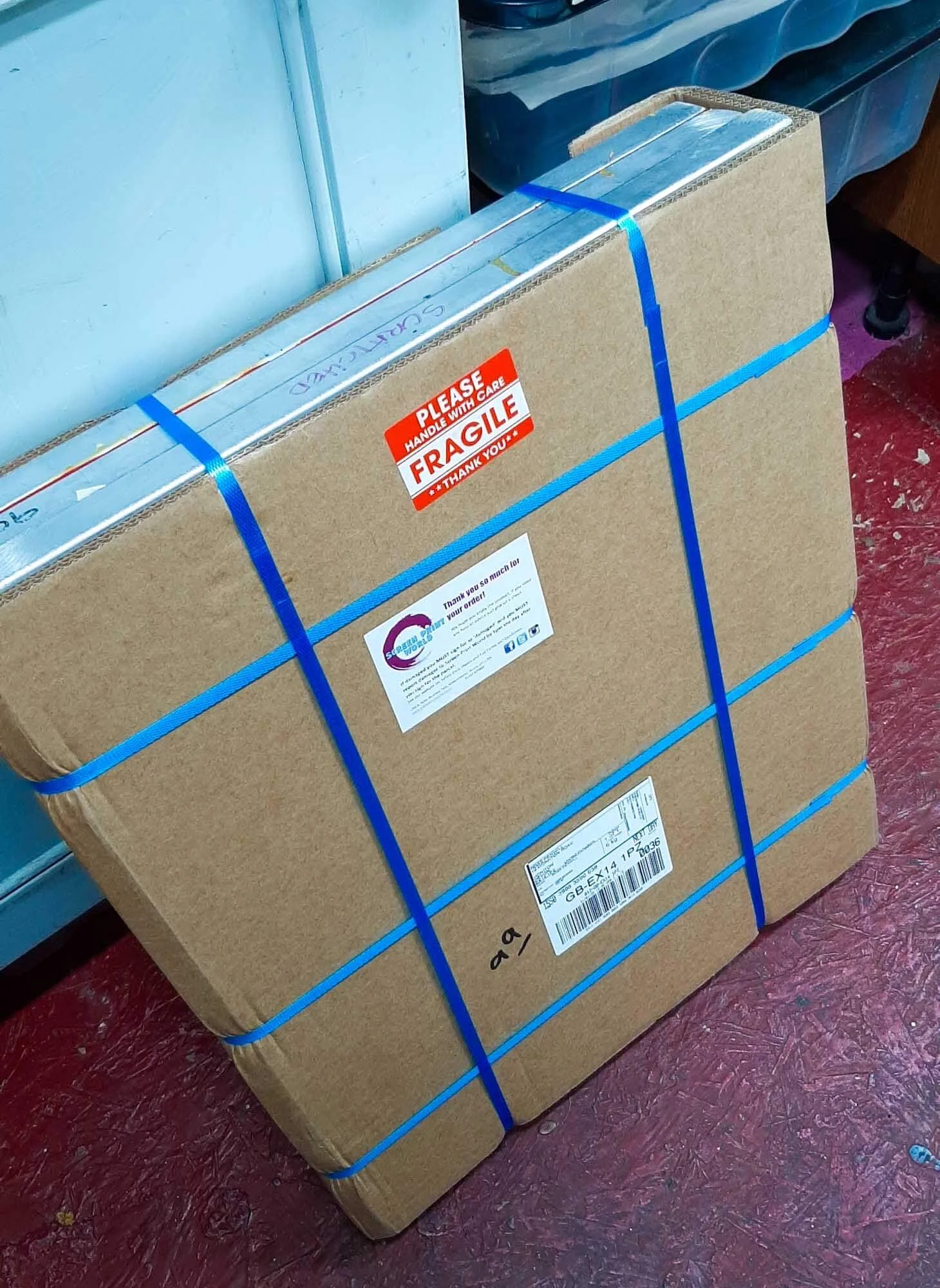
Three aluminium-framed screens fresh from having been re-meshed.
Conclusion
Screens might look like straightforward tools, but the choices you make — mesh count, frame type, how you store them — all shape the way you print. I’ve settled into a setup that suits my inks, my imagery and the realities of a tiny studio, and it’s one of those areas where small decisions make a big difference. As long as the mesh is cared for and the frames stay protected, the screens will look after the prints.
———
This post is part of the Screen printing Tools & Materials Series
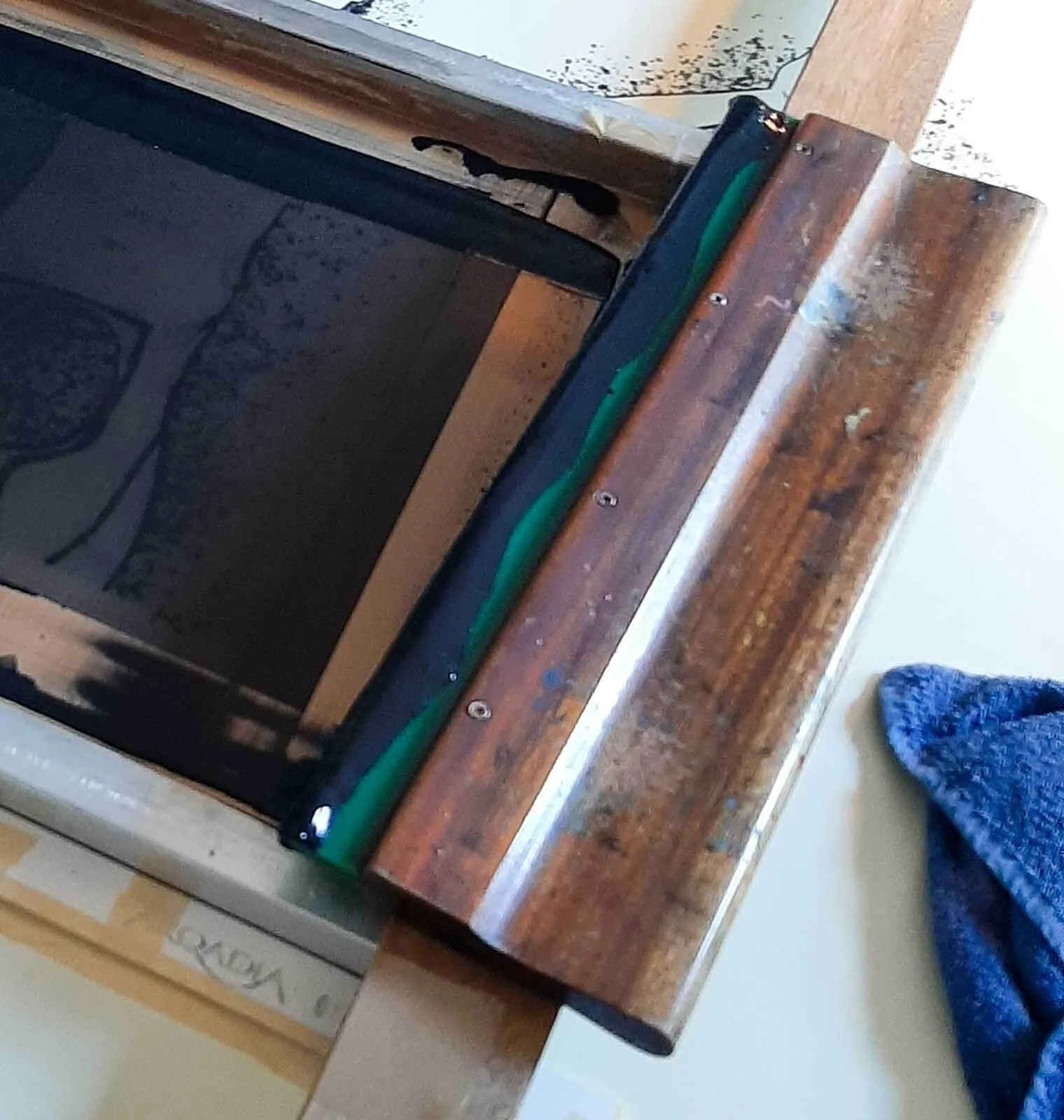
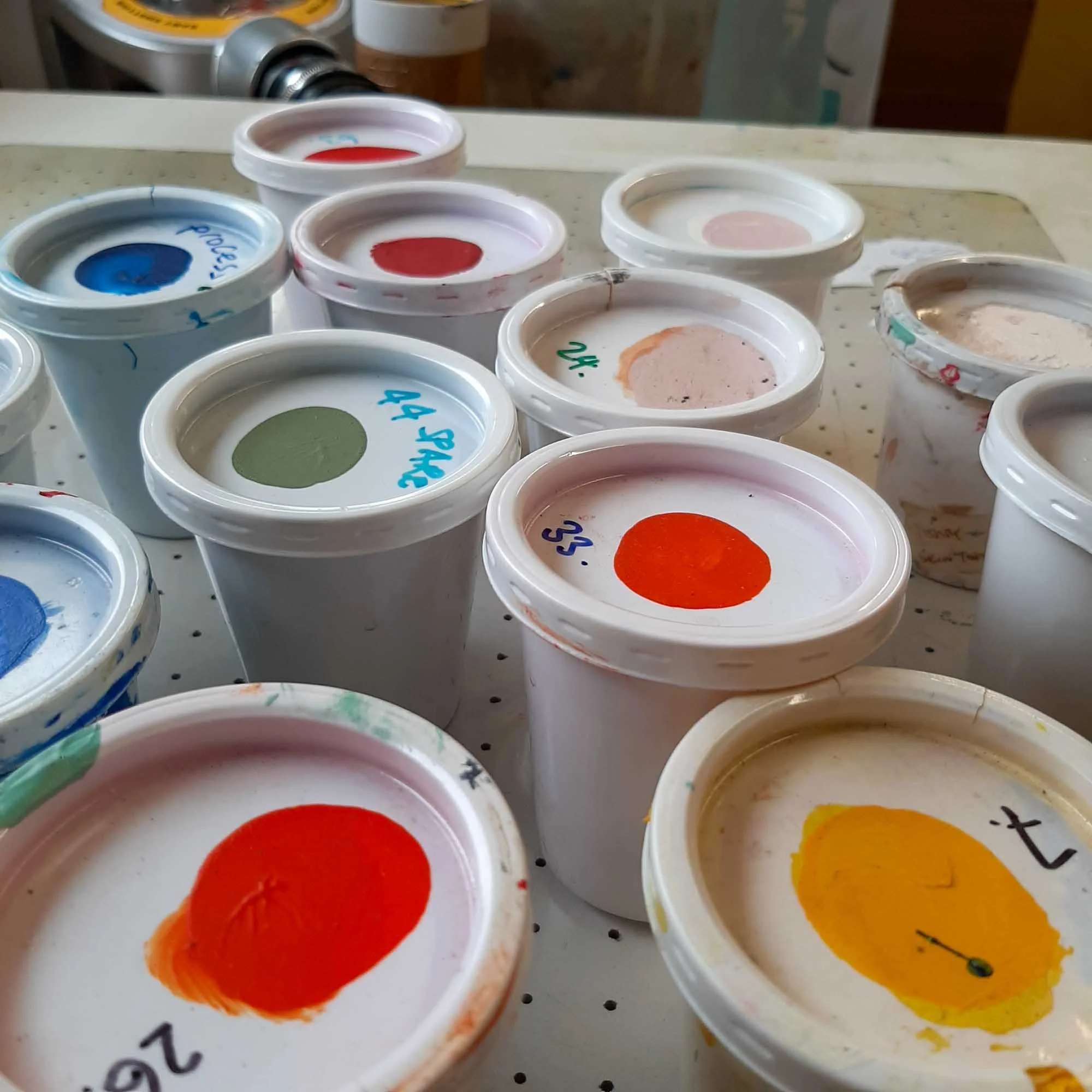

I use water‑based acrylic inks for all my printing, mixing them thick, storing them carefully and reviving older colours when needed. In this post, I share how I mix my inks, the colours I keep on hand, and the storage setup that keeps more than 120 pots in good working order.