Wineworld
(hidden high street series)
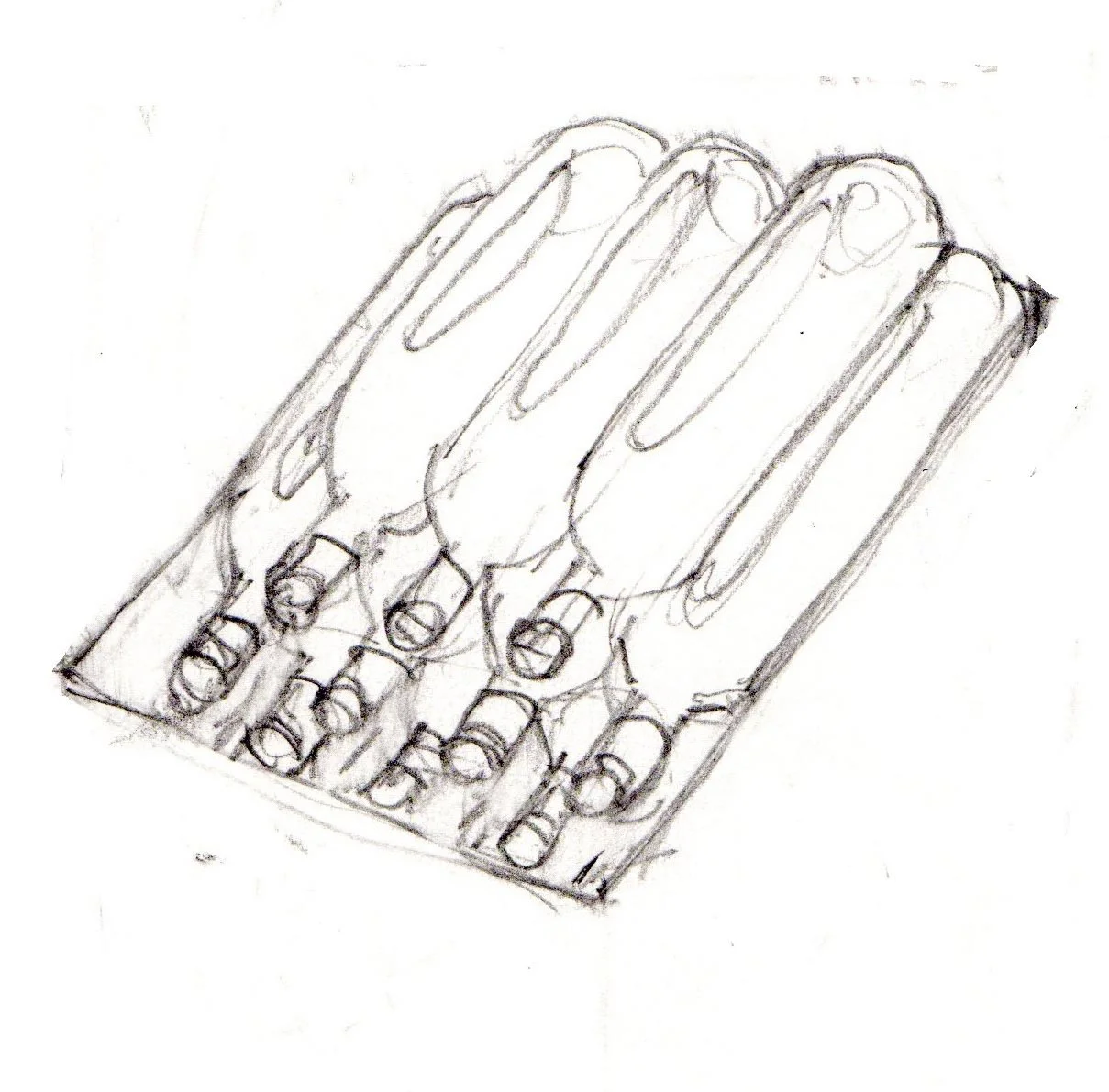
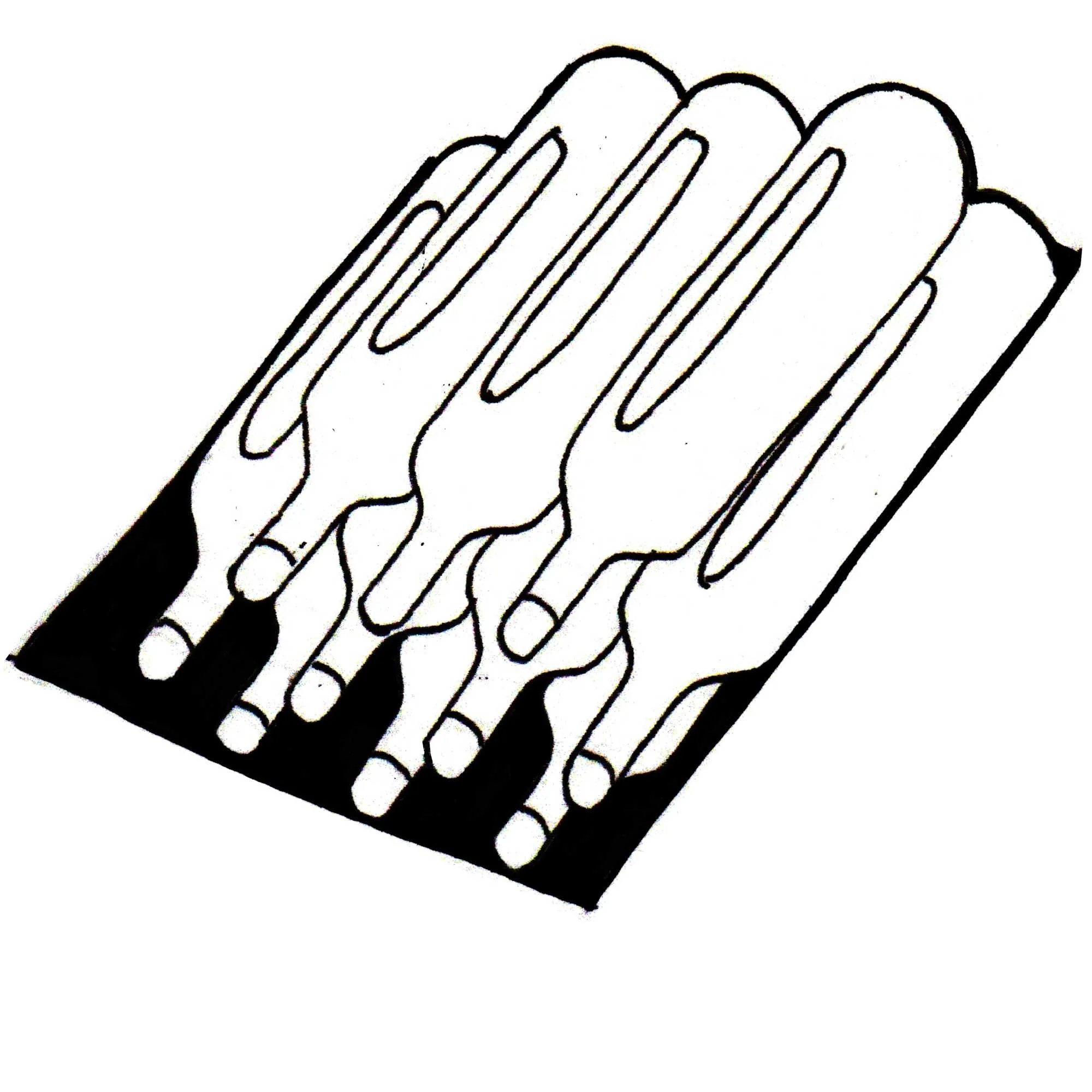
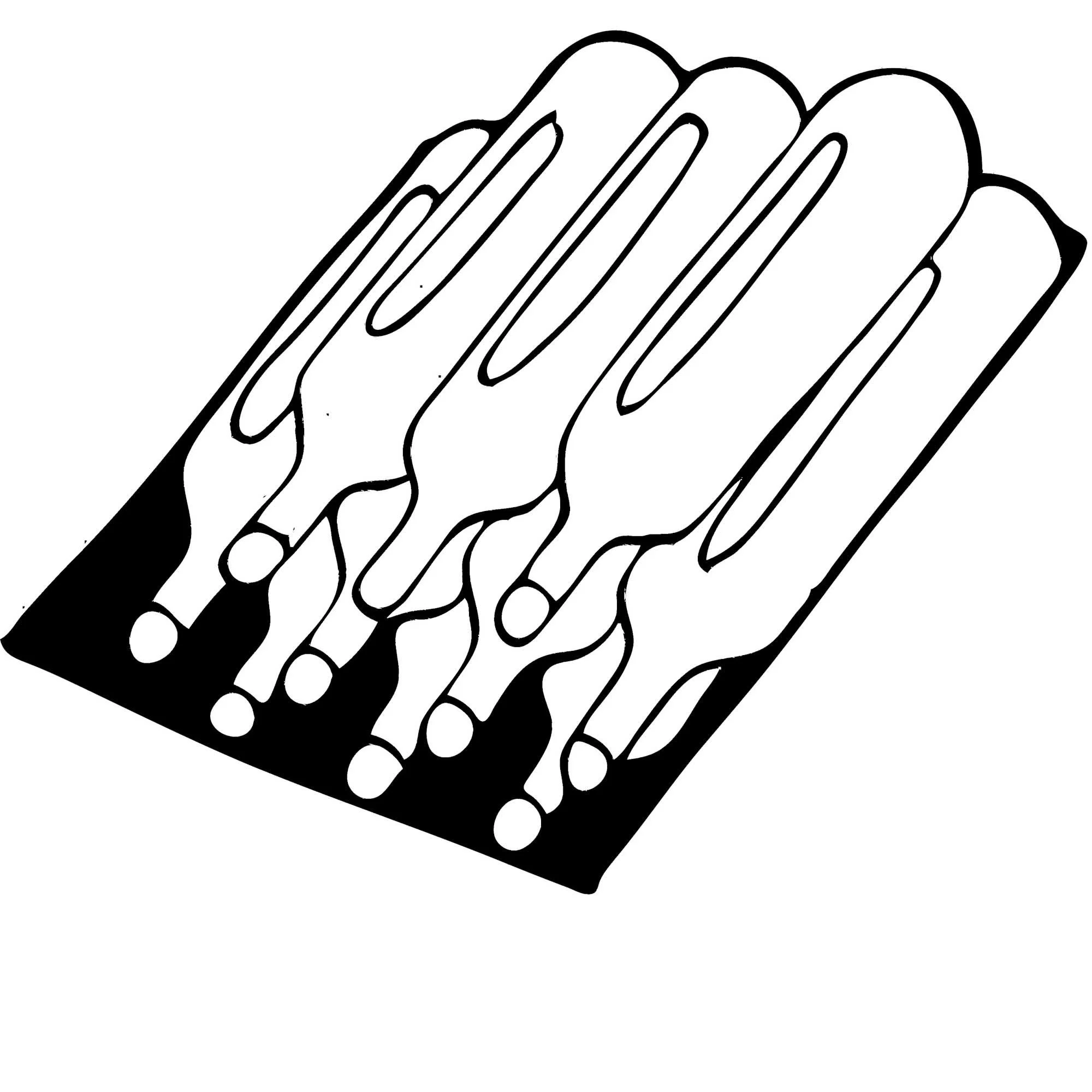
WineWorld began with something very ordinary - a simple wine display in the local shop. I found myself drawn to its structure and shapes, and as I worked, the scene gradually shifted into something more abstract and reflective. At first glance, the print shows a neat stack of bottles, drawn with smooth, flowing lines that suggest order. But as I spent more time with the image, I realised there were tensions and contradictions within it that I wanted to explore.
The deep black of the wine bin beneath the bottles felt important. It created a kind of void - literal, of course, but also symbolic. It made me think about what sits beneath the polished surface of things we often treat as refined or sophisticated. By stripping the bottles of their labels and reducing them to simple forms, I was trying to hint at anonymity and sameness, even though their soft curves and air pockets still suggest fragility and potential energy. The pyramid arrangement aims for balance, but the small imperfections - the slightly skewed lids, the missing detail at the centre - gently disrupt that sense of harmony.
As I worked, I found myself thinking about wine not just as a cultural symbol but also as part of a wider conversation about alcohol and its place in society. Its ubiquity, its marketing, and the way it’s woven into everyday life all carry more complicated implications. The dark void beneath the bottles can be read as a descent into excess or dependency - a quiet reminder of the waste and harm that can sit behind something we often treat casually.
When the bottles drop into the bin, they start to resemble something more human. Their rounded, off‑centre lids become heads, and the bottles lie side by side like figures. It’s a stark image, and for me it hints at the real human cost behind what can seem like harmless indulgence.
In the end, WineWorld became a way for me to reflect on the systems and habits that surround alcohol - how it’s sold, how it’s normalised, and how easily it becomes part of daily life. By simplifying and abstracting the forms, I hoped to encourage viewers to look a little deeper and sit with some of the discomfort the piece suggests. It’s a more introspective contribution to the Hidden High Street series, and my way of engaging with a familiar part of British high street culture from a slightly different angle.

This work is from the Hidden High Street series - an exploration of the often unnoticed spaces and everyday encounters that form the essence of our shared communities.
Read more about the Hidden High Street series here
Produced as a limited edition - hand‑pulled in the studio, this work is signed/stamped and numbered to ensure their authenticity and collectability. Each edition is created using traditional silkscreen techniques on archival paper, with every layer printed by hand.
Collectors can choose to acquire these works in two forms:
• On Paper — the edition in its purest state, unframed, offering flexibility for personal presentation.
• Artist‑Framed — mounted and framed by the artist, using bespoke methods to present the work as a complete, ready‑to‑hang artwork.
This dual approach allows the work to be appreciated either as a print to be lived with and framed to taste, or as a finished object crafted entirely within the artist’s practice.
more from this series…
-
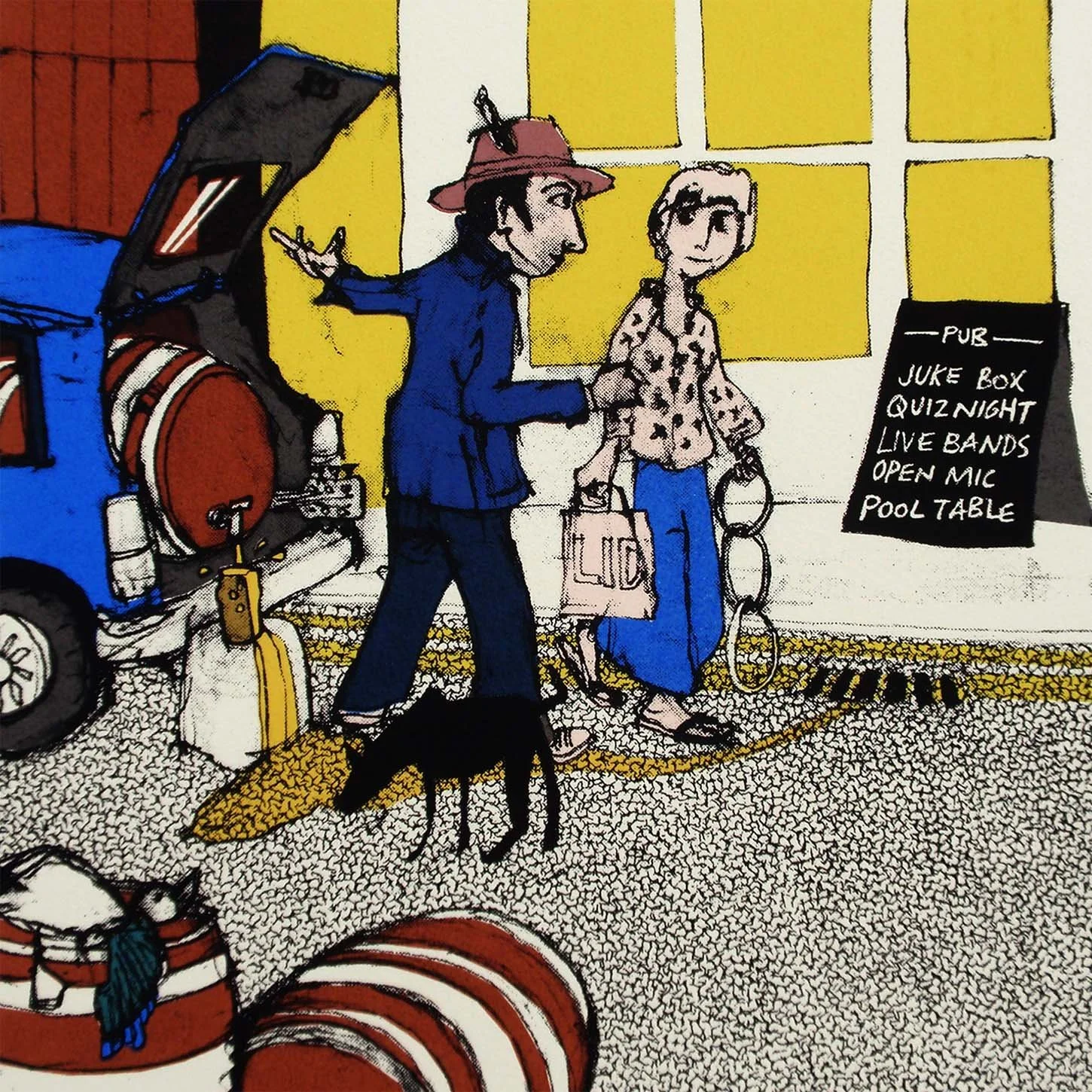
![Cartoon-like image depicting two people walking past a pub with a sign advertising entertainment like jukebox and quiz night. A blue car with barrels in the trunk is parked nearby. A black dog crosses their path.]()
The Three Tuns transforms a pub sign into a layered reflection on identity, relationships, and the uneasy role of alcohol in British culture.
-
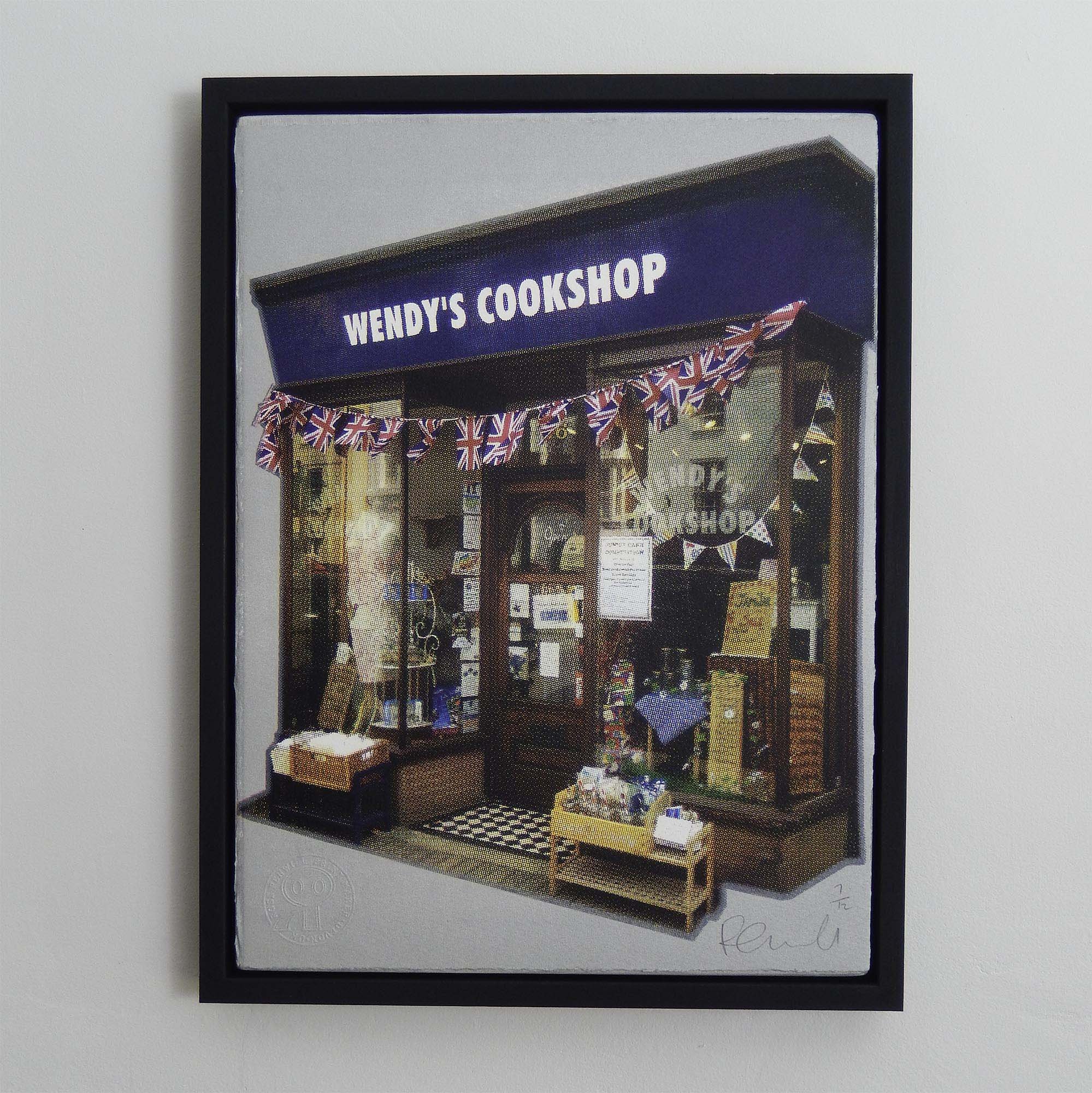
![Framed picture of "Wendy's Cookshop" storefront with British flag bunting.]()
Wendy’s Cookshop honours a high street gem, celebrating its warmth, individuality, and the quiet beauty of personal, independent businesses.
-
![Framed artwork featuring a grid of colourful squares with abstract lace patterns on a black background.]()
This work weaves together light, reflection, and heritage, turning a quiet tradition into a luminous meditation on craft and memory.
-
![Illustration of various sports equipment including sneakers, backpack, shirts, socks, basketball, tennis rackets, squash racket, ping pong paddles, volleyball, swimsuits, sports bag, soccer ball, and rugby ball.]()
Honiton Sports blends vivid sporting imagery with personal memory, turning everyday objects into quiet reflections on identity and nostalgia.
-
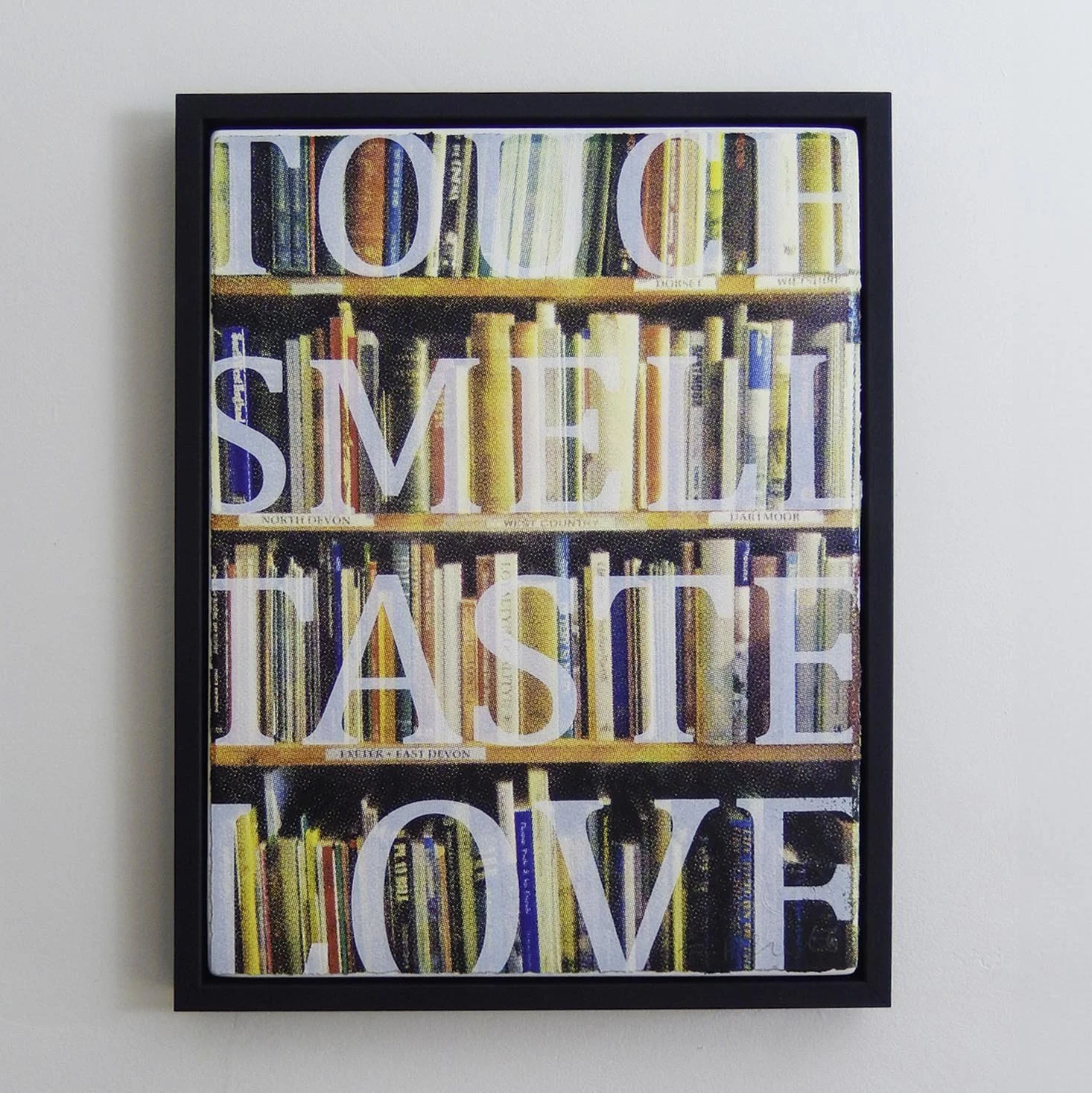
![Framed artwork featuring bold white text "TOUCH SMELL TASTE LOVE" overlaid on a background of colorful books on shelves.]()
This work turns the quiet charm of a second-hand bookstore into a rich, sensory tribute to memory, literature, and the beauty of physical experience.
-
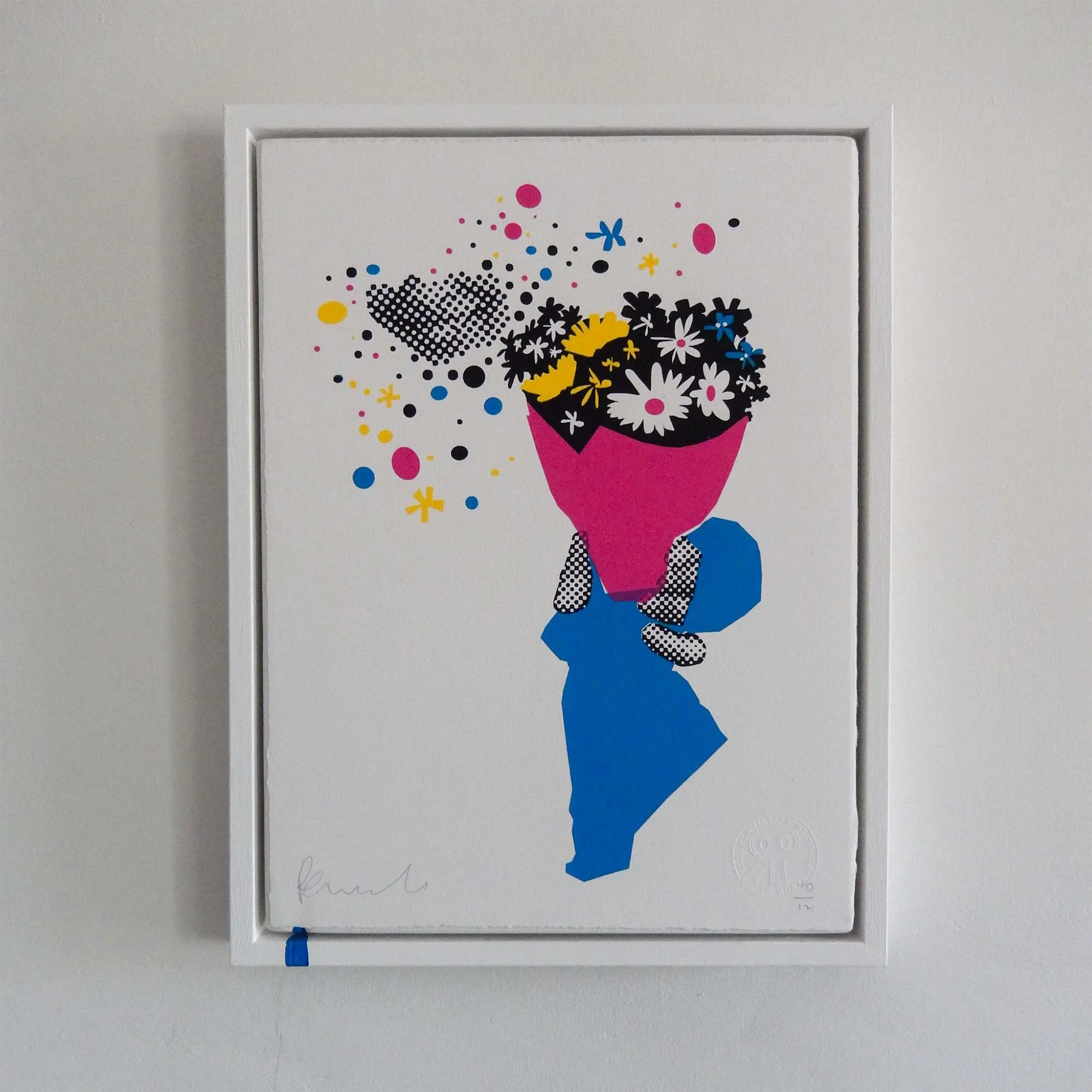
![Colorful abstract artwork featuring a figure holding a bouquet of flowers, with splashes of pink, blue, yellow, and black against a white background.]()
Hillview Floristry transforms a fleeting market exchange into a quiet meditation on identity, labor, and the intimate beauty found in overlooked moments.
-
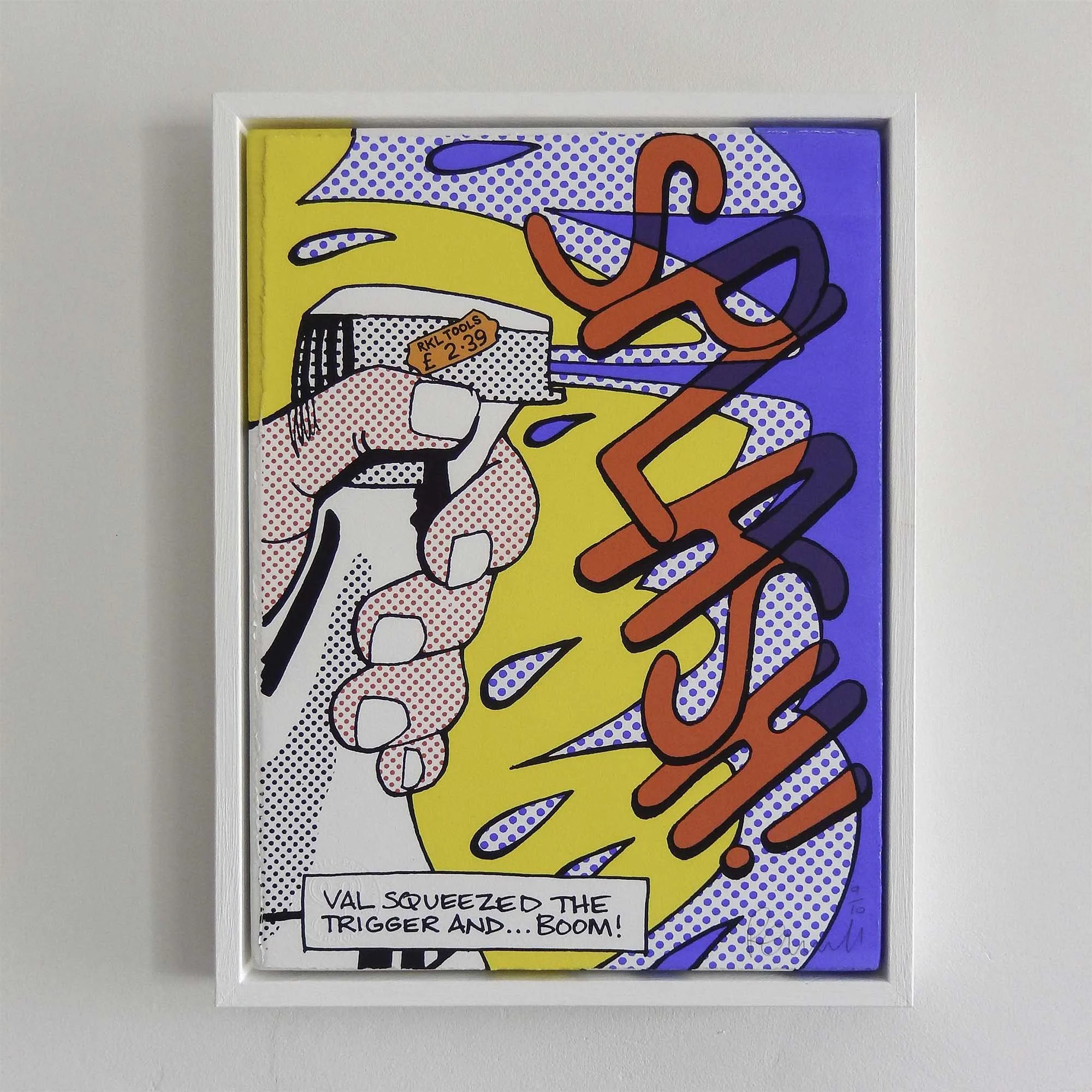
![Pop art style painting with vibrant colors depicting a hand holding a spray can. Text bubble reads 'VAL SQUEEZED THE TRIGGER AND... BOOM!']()
RKL Tools elevates an everyday object into a bold, comic book-style burst of humour, nostalgia, and playful high street storytelling.
-
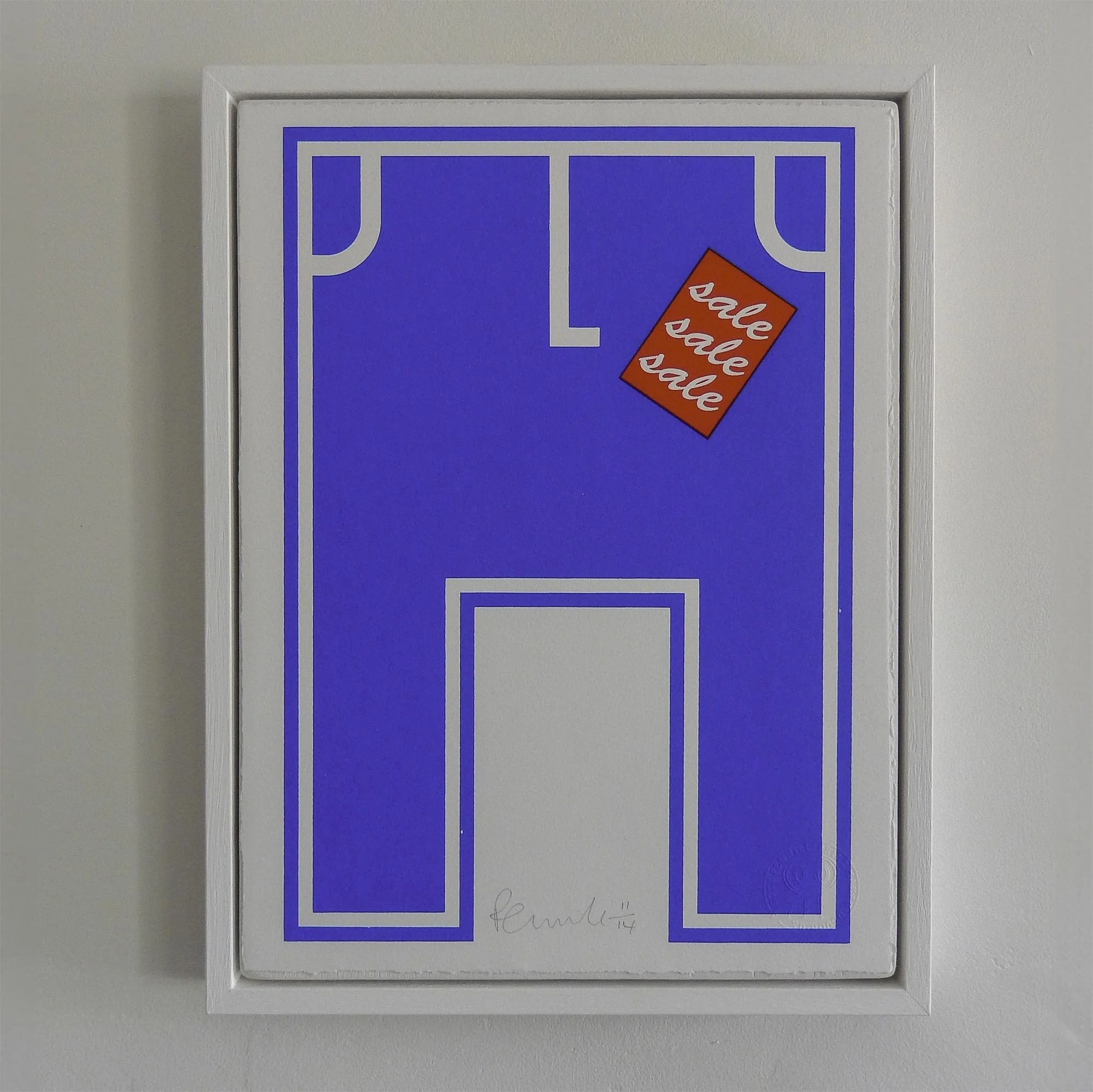
![Minimalist artwork of blue trousers with a red "sale" tag]()
Dalzell Distributors transforms a simple shopfront spectacle into a bold, humorous tribute to the eccentricity and ingenuity of independent retailers.
-
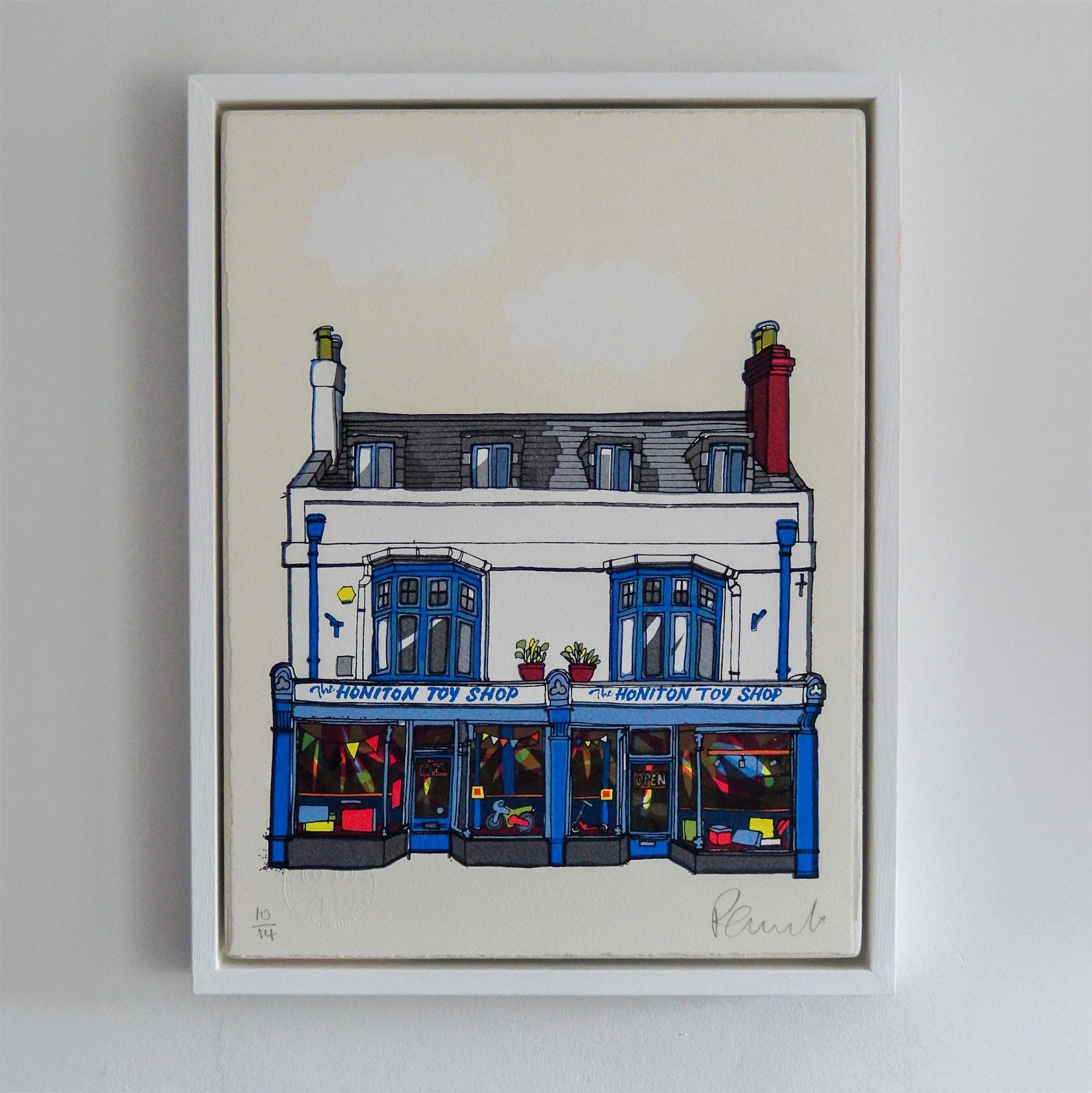
![Illustration of a toy shop with blue and white facade, labeled "The Honiton Toy Shop," featuring colorful toy displays in the windows.]()
Honiton Toy Shop captures the nostalgia and quiet magic of a familiar high street gem, blending architectural charm with childhood wonder.
-
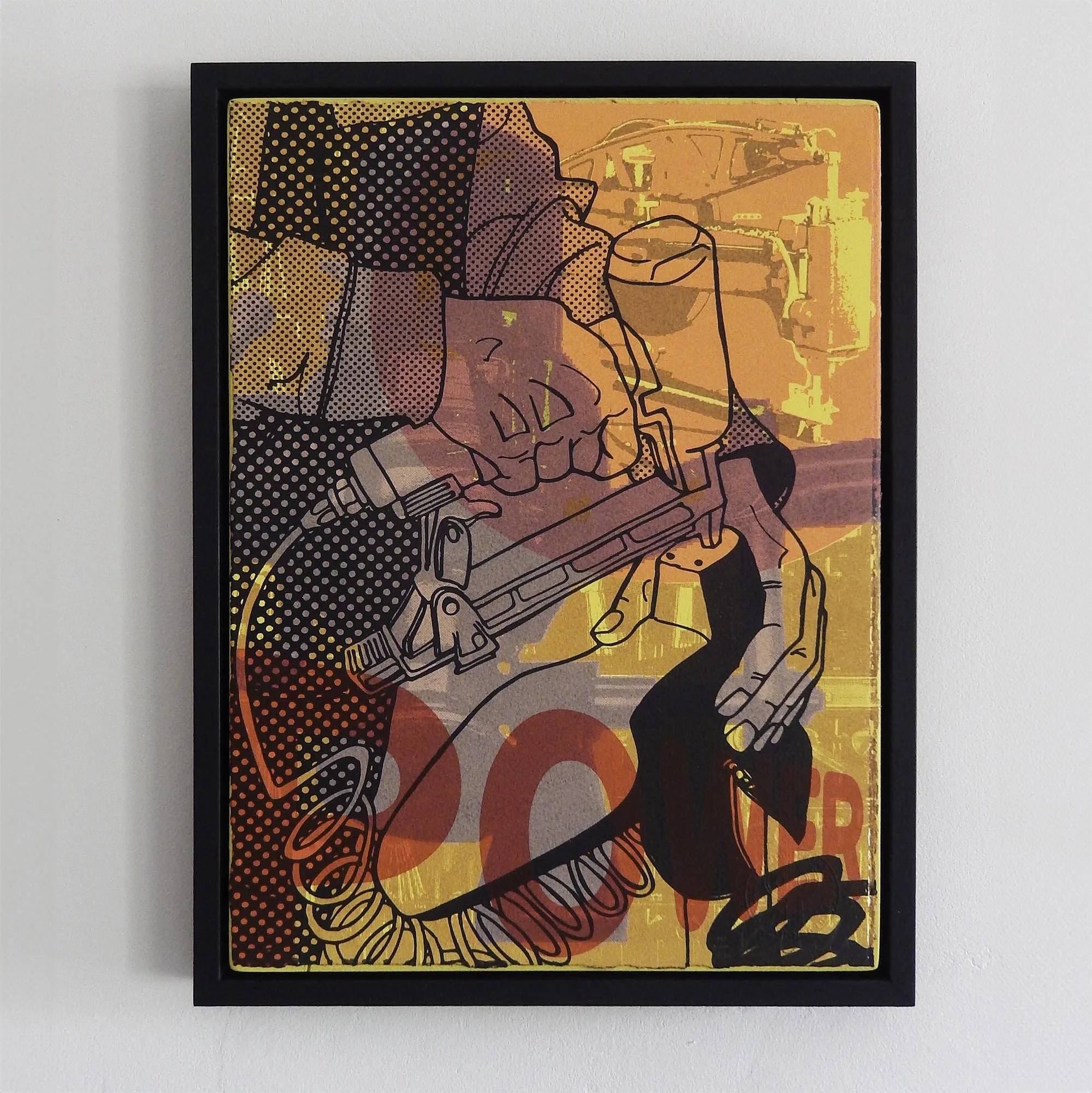
![Pop art-style illustration of a person holding a pneumatic nail gun, with abstract shapes and a yellow-orange colour scheme. The image is framed and mounted on a white wall.]()
Power Shoes elevates the quiet craft of cobbling into a bold tribute to expertise, resilience, and the artistry of skilled manual labor.
-
![Vintage-style menu board with items like jumbo burger, king rib, fish cake, and their prices. Decorative illustrations of people depict different interaction scenes.]()
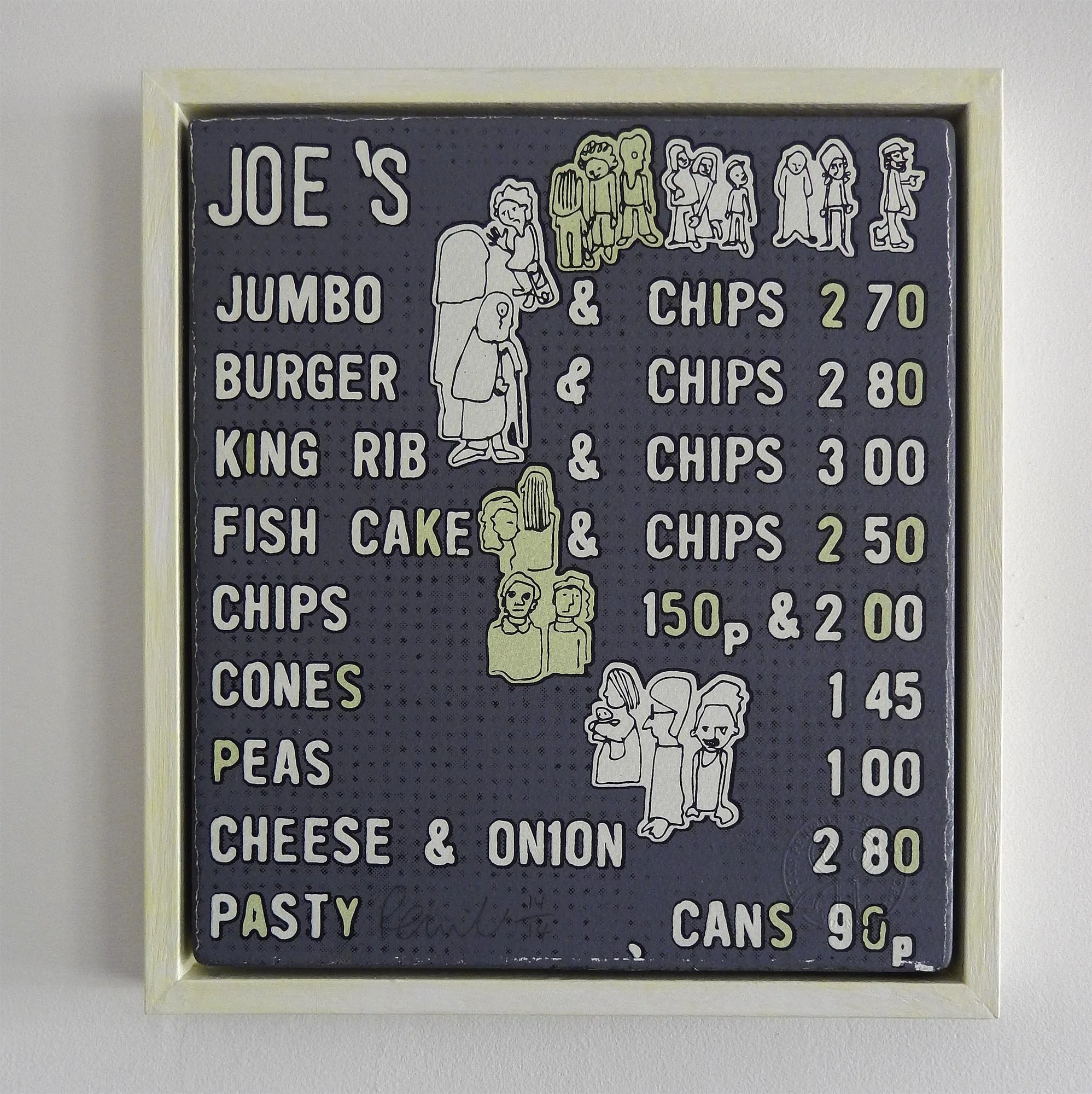
Chippie Joe’s turns a humble peg board menu into a lively portrait of community, routine, and the quiet charm of the local chippie.